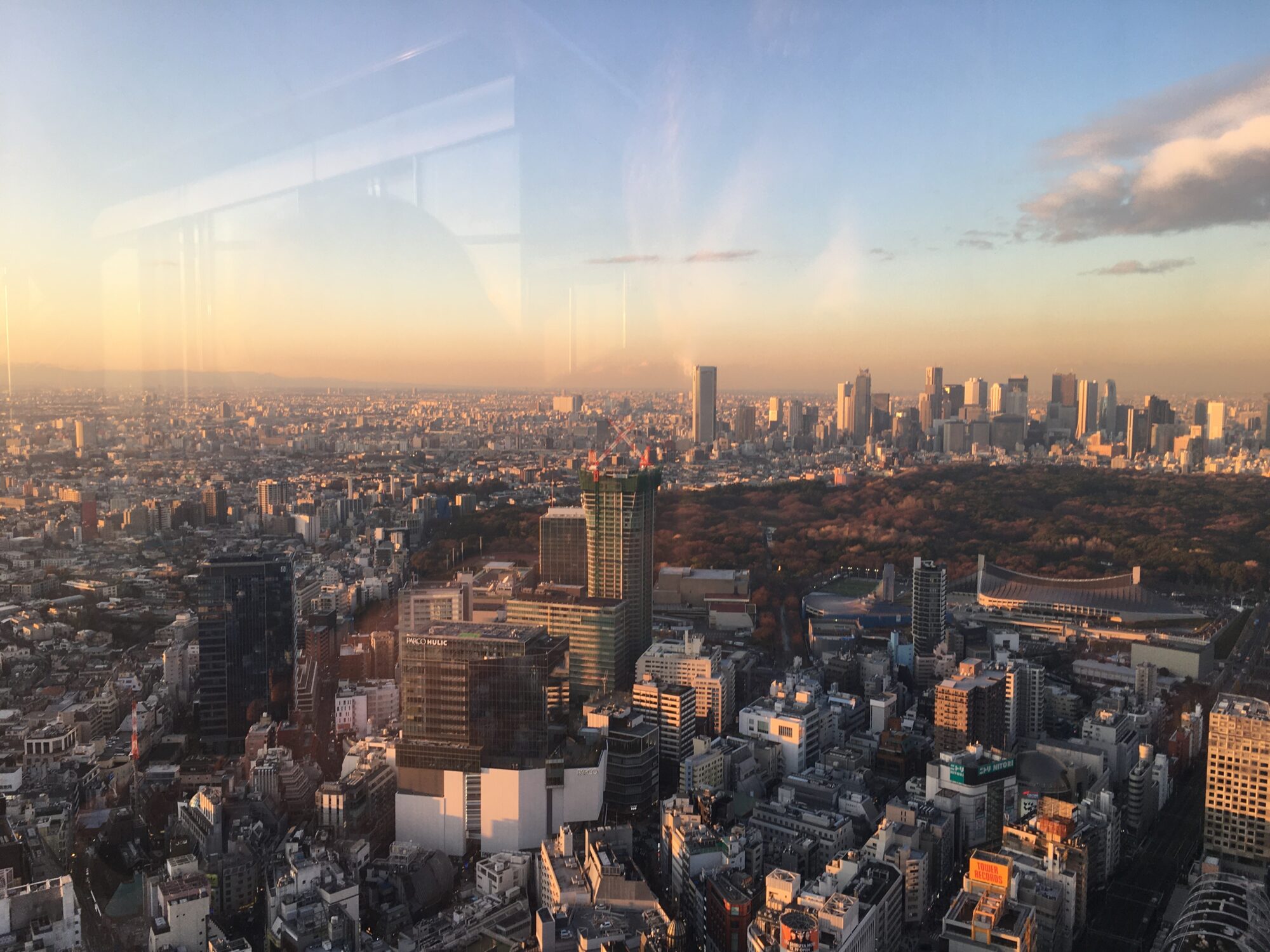

Last weekend, we had the chance to hold our panel “The Emotional City: Memory, Sound, and Belonging in Tokyo’s Liminal Spaces” at the Asian Studies Conference Japan (ASCJ) 2026 at Sophia University. After many months of planning, it was wonderful to finally see everything come together. We had a full room, many interesting questions, and a discussion that continued even outside the classroom. When we first developed the panel, we all came from different backgrounds, but shared one common interest. We wanted to better understand how people actually experience cities, not only through buildings or planning, but through sounds, memories, emotions and everyday encounters. Tokyo was our common case, but many of the ideas could also apply to cities around the world.
The panel started with Eduard Hauska’s presentation, “Soundmarks of the City: Memory and Belonging in Tokyo’s Sonic Micro-Spaces.“ Eduard invited us to think differently about the city by listening to it. He showed that sounds of e.g. the postman or garbage collection cars, are much more than background noise. Station melodies, shopkeepers calling customers, temple bells or even the familiar sounds of a neighbourhood become part of people’s memories and identity. His presentation demonstrated how these everyday soundmarks create emotional connections and help people feel that they belong to a place. It was a fascinating reminder that cities are experienced with all our senses, not only through what we see.
Next, Lisa Woite presented “Augmented Echoes: Soundwalking as Urban Re-Appropriation along Tokyo’s Waterfronts.” Her research combined soundwalking, artistic practice and digital technologies to explore Tokyo’s waterfronts in completely new ways. Through listening and movement, she showed how people can rediscover places as Sanya which are often overlooked and create new relationships with the urban environment. I especially enjoyed how her work connected artistic methods with urban research and opened many new possibilities for thinking about public space.
In my own presentation, “Resonating Thresholds: Emotions and Networks in Tokyo’s Liminal Spaces,“ I focused on Tokyo’s alleyways and other in-between spaces. Rather than seeing these places as simply narrow passages, I argued that they function as everyday social infrastructure. They are places where neighbours greet each other, shopkeepers recognise regular customers, children feel comfortable walking, and weak social ties slowly develop over time. These repeated everyday encounters build trust, belonging and resilience, even if we often do not notice them. I also suggested that emotions are not separate from the city but emerge through these daily interactions and networks that connect people with place.
Although our three presentations were different in nature, they complemented each other surprisingly well. Together they showed that memory, sound, movement, social interaction and everyday practices all play an important role in shaping how cities are experienced. The discussion afterwards became very lively, with questions about liminal spaces, emotional geography, sound studies, neighbourhood change and how these ideas could influence future urban planning and design.
I would like to sincerely thank my fellow presenters Eduard Hauska and Lisa Woite for their inspiring contributions, our excellent chair Johannes Kiener, who guided the discussion so thoughtfully, and our discussant Fernando Ortiz-Moya, whose comments helped connect our three papers into a broader conversation about emotional urbanism and everyday city life. And of course, a big thank you to everyone who came to the session. The audience asked challenging questions, shared their own experiences and continued the conversations afterwards. For me, this is one of the best parts of conferences. Sometimes the most interesting ideas don’t appear during the presentations, but in the conversations afterwards over coffee.
I left ASCJ with many new ideas and a feeling that this panel was only the beginning. As cities continue to change, I believe we need to pay more attention not only to how they look, but also to how they sound, how they are remembered, and how ordinary everyday spaces quietly create belonging. Those are often the small things that keep cities alive.


